
Can Cracks in Drywall Be a Sign of Structural Damage?
Cracks in drywall are common in homes and do not always indicate a serious problem. Small cracks can develop as building materials expand, contract, dry, and settle over time. Poor drywall installation, seasonal humidity changes, and normal building movement can also create visible cracks.
However, some drywall cracks may be signs of foundation settlement, framing movement, roof problems, damaged supports, or other structural concerns.
The location, direction, width, and rate of change of a drywall crack can provide clues about its cause. Cracks become more concerning when they appear suddenly, continue to widen, return after repair, or occur alongside sloping floors, sticking doors, bowed walls, or foundation damage.
Are Drywall Cracks Always Structural?
No. Most isolated drywall cracks are not evidence of serious structural damage.
Drywall is a relatively brittle finish material. It can crack even when the framing behind it remains structurally sound.
Common non-structural causes include:
- Normal building settlement
- Seasonal temperature changes
- Humidity changes
- Drywall shrinkage
- Poorly finished joints
- Loose fasteners
- Inadequate joint tape
- Minor vibration
- Truss movement
- Material expansion and contraction
A small crack that remains unchanged for many years may be cosmetic.
A crack deserves closer attention when it changes over time or appears with other signs of building movement.
Why Does Drywall Crack?
Drywall panels are attached to wood or steel framing. When the framing moves, the drywall finish may crack because it cannot stretch significantly.
Movement can occur because of:
- Foundation settlement
- Wood shrinkage
- Roof movement
- Floor deflection
- Moisture changes
- Structural overloading
- Renovations
- Soil movement
- Water damage
- Poor framing connections
- Temperature changes
The crack itself does not always reveal whether the movement is harmless or structural. The surrounding conditions must also be considered.
What Types of Drywall Cracks Are Usually Cosmetic?
Some drywall crack patterns are commonly associated with finish problems rather than structural damage.
Hairline Cracks Along Drywall Joints
Thin cracks that follow a straight drywall joint may result from:
- Joint compound shrinkage
- Poor taping
- Insufficient fasteners
- Minor framing movement
- Seasonal humidity changes
These cracks are often cosmetic, especially when they remain narrow and stable.
Cracks at Inside Corners
Cracks where two walls meet or where a wall meets the ceiling may result from:
- Normal wood movement
- Poor taping
- Shrinking framing
- Seasonal expansion and contraction
- Roof truss uplift
The crack may reopen after cosmetic repair if the underlying movement continues seasonally.
Nail or Screw Pops
Drywall fasteners can become visible when framing shrinks or the fastener loses its grip.
Signs include:
- Small circular bumps
- Cracked compound over a screw
- A visible fastener head
- Repeated pops along a stud or ceiling joist
Fastener pops are usually cosmetic unless they occur with broader wall or ceiling movement.
Fine Cracks in New Construction
New homes may develop small cracks as wood framing dries and the building adjusts.
These often appear:
- At wall and ceiling joints
- Above doors
- At drywall seams
- Near stair openings
- Around trim
Minor settlement cracking may stabilize after the first few years.
Cracks Caused by Poor Drywall Installation
Drywall cracks can form when:
- Joints are poorly taped
- Panels are not properly supported
- Fasteners are spaced too far apart
- Butt joints are improperly finished
- Drywall is attached across moving framing
- The wrong compound is used
- Panels were installed before framing dried
These cracks may look concerning but remain limited to the finish system.
Which Drywall Cracks May Indicate Structural Damage?
Drywall cracks become more concerning when their pattern suggests movement in the framing or foundation.
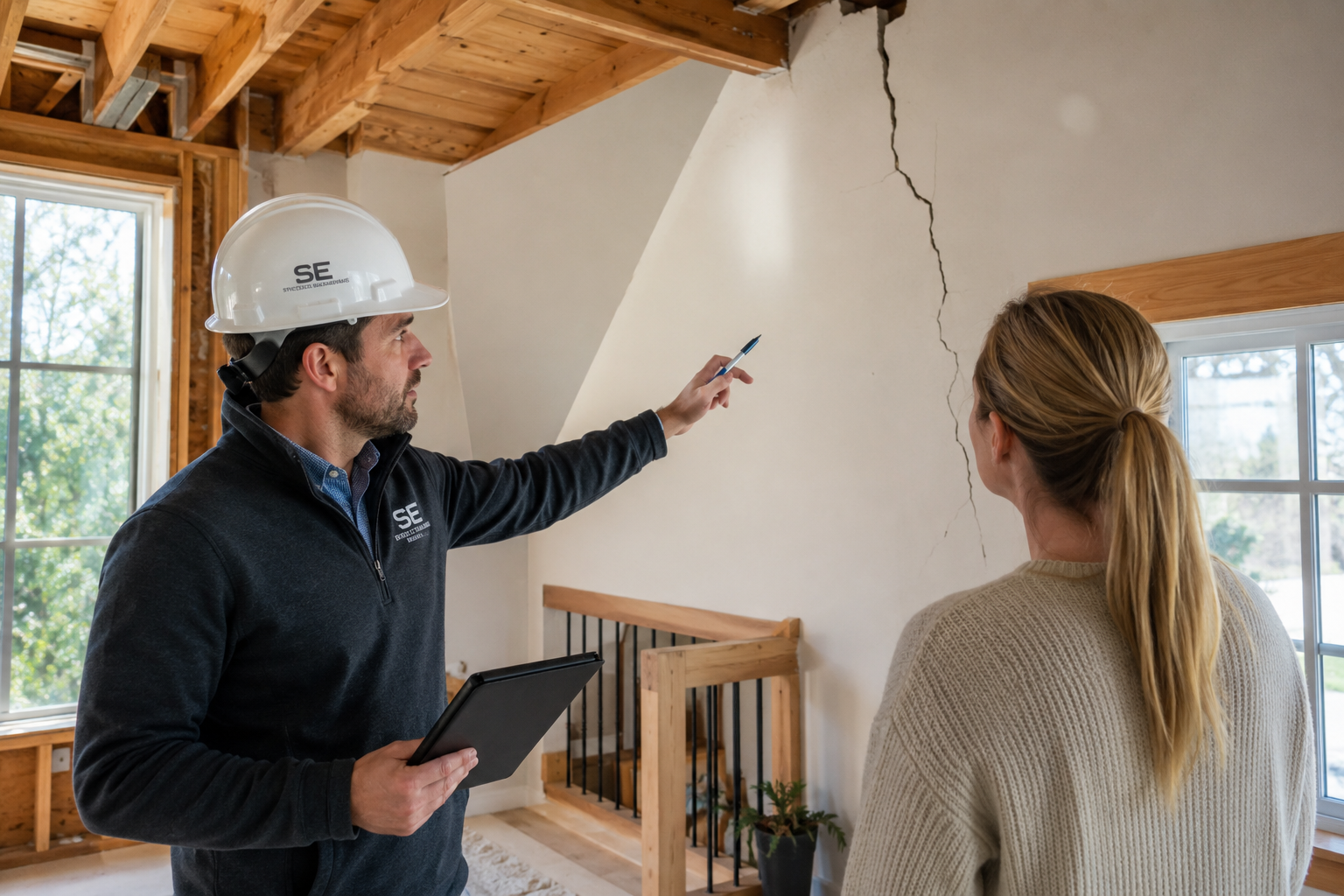
Diagonal Cracks Above Doors and Windows
A diagonal crack extending from the corner of a door or window may indicate that the opening has moved out of square.
Possible causes include:
- Foundation settlement
- Header deflection
- Wall movement
- Floor movement
- Framing shrinkage
- Concentrated loads
Small diagonal cracks can still be cosmetic. Concern increases when the crack is wide, growing, repeated in several locations, or associated with sticking doors and windows.
Stair-Step Cracking Through Finished Walls
A stepped crack pattern may follow framing, masonry, or joints behind the drywall.
This pattern may suggest:
- Differential settlement
- Movement in a masonry wall
- Foundation shifting
- Separation between building sections
- Movement near an addition
The condition should be considered with exterior masonry and foundation cracking.
Long Horizontal Cracks
A horizontal drywall crack may be caused by a joint between drywall panels.
It may also reflect movement in:
- A foundation wall
- A framed wall
- A floor system
- A roof system
- A beam or header
A horizontal crack is more concerning when the wall is bowed, leaning, or visibly displaced.
Wide Cracks
Crack width alone cannot confirm structural damage, but wider cracks generally deserve more attention.
A crack may be more concerning when it:
- Is visibly open
- Continues to widen
- Has uneven edges
- Shows displacement
- Extends through multiple materials
- Reappears after repair
A narrow growing crack can be more significant than a wider crack that has remained stable for decades.
Cracks That Repeatedly Return
A crack that reappears after proper drywall repair may indicate ongoing movement.
Possible causes include:
- Seasonal framing movement
- Foundation settlement
- Roof truss uplift
- Beam deflection
- Moisture problems
- Inadequate support
- Movement between old and new construction
Repeated repairs may hide the symptom without addressing the cause.
Cracks Across Several Rooms
A single drywall crack may be cosmetic. Similar cracks appearing across multiple rooms or floors may indicate broader movement.
Look for patterns such as:
- Cracks aligned vertically through several levels
- Diagonal cracks above multiple doors
- Cracks near the same side of the house
- Separation between walls and ceilings
- Cracks associated with uneven floors
A consistent pattern can help identify the direction and extent of movement.
Cracks Accompanied by Wall Displacement
A crack is more concerning when one side is visibly higher, lower, or farther forward than the other.
Displacement may indicate:
- Framing movement
- Foundation settlement
- Wall rotation
- Beam movement
- Structural separation
Surface patching will not correct the underlying alignment problem.
Cracks Around Load-Bearing Walls
Cracks near walls supporting floors or roofs may indicate movement in the structural system.
Concern increases when the area also shows:
- Ceiling sag
- Floor slope
- Beam deflection
- Sticking doors
- Post movement
- Foundation cracking
The wall may not be the cause of the movement. It may simply be where the movement becomes visible.
Cracks Near Additions
Additions may move differently from the original house because they have different:
- Foundations
- Construction ages
- Soil conditions
- Framing systems
- Loads
- Drainage conditions
Cracks may develop where the addition meets the original building.
Warning signs include:
- Repeated vertical cracks
- Floor elevation differences
- Roof separation
- Exterior siding gaps
- Foundation cracking
- Water entry
What Other Signs Suggest Structural Damage?
Drywall cracks should not be evaluated in isolation.
They become more concerning when accompanied by other changes in the building.
Sticking Doors and Windows
Doors and windows may become difficult to operate when openings move out of square.
Signs include:
- Doors rubbing against frames
- Locks no longer aligning
- Uneven gaps around doors
- Windows becoming difficult to open
- Cracked glass
- Frames separating from walls
Temporary humidity can also cause sticking. Several new alignment problems may indicate broader movement.
Sloping or Uneven Floors
Floor movement may result from:
- Foundation settlement
- Sagging beams
- Damaged joists
- Shifted columns
- Rot
- Poor original construction
- Soil movement
A drywall crack above a sloping floor may be part of a larger structural pattern.
Sagging Ceilings
Ceiling sag may be caused by:
- Damaged joists
- Roof movement
- Wet drywall
- Failed fasteners
- Beam deflection
- Excessive loading
A sagging ceiling with cracking should be treated carefully, especially when water damage or structural movement is present.
Gaps Between Walls and Ceilings
A gap may result from:
- Truss uplift
- Wall movement
- Floor settlement
- Foundation movement
- Framing shrinkage
Seasonal gaps near the ceiling may be caused by roof truss movement. Permanent or growing separation may indicate a more significant problem.
Foundation Cracks
Drywall cracks may be related to foundation movement when the foundation also shows:
- Horizontal cracks
- Diagonal cracks
- Stair-step cracks
- Wide openings
- Displacement
- Bowing
- Settlement
The location of interior cracks may align with movement visible in the basement or exterior.
Bowed or Leaning Walls
A wall that is visibly bowed or leaning may indicate:
- Foundation pressure
- Framing failure
- Moisture damage
- Missing bracing
- Overloading
- Impact damage
Cracks in the finish may appear where the wall bends or separates from adjacent components.
Sagging Beams or Shifted Columns
Movement in beams and columns can affect walls and ceilings above.
Signs include:
- Beam deflection
- Cracked wood
- Leaning posts
- Loose connections
- Columns sinking into slabs
- Gaps between posts and beams
Drywall cracking may be the first visible sign on the upper floors.
Exterior Masonry Cracks
Exterior brick or block cracking may support the conclusion that interior drywall cracks are related to structural movement.
More concerning masonry patterns include:
- Stair-step cracks
- Cracks through bricks
- Bulging walls
- Displaced mortar joints
- Separation around windows
- Movement near corners
What Do Diagonal Drywall Cracks Mean?
Diagonal cracks often develop at the corners of doors and windows because openings create stress concentrations in walls.
Possible causes include:
- Normal settlement
- Framing shrinkage
- Header movement
- Foundation settlement
- Wall racking
- Floor deflection
The crack is more concerning when it:
- Widens over time
- Is visible on both sides of the wall
- Extends through masonry
- Appears with sticking doors
- Occurs in several rooms
- Shows displacement
- Appears suddenly
A short, stable hairline crack may only require monitoring.
What Do Vertical Drywall Cracks Mean?
Vertical cracks often follow drywall joints or framing members.
Possible causes include:
- Poor joint finishing
- Panel movement
- Framing shrinkage
- Movement between building sections
- Foundation settlement
A straight vertical crack at a drywall seam is often cosmetic.
A vertical crack that extends through several floors or aligns with foundation movement may require closer review.
What Do Horizontal Drywall Cracks Mean?
Horizontal cracks may follow the seam between drywall sheets.
They can result from:
- Poor taping
- Seasonal framing movement
- Wall deflection
- Foundation pressure
- Ceiling or floor movement
A horizontal crack near the middle of a basement wall can be more concerning when the foundation wall behind it is bowing.
The finished wall may need to be opened to confirm the condition of the structural wall behind it.
What Do Ceiling Cracks Mean?
Ceiling cracks can result from:
- Drywall joint movement
- Roof truss uplift
- Joist movement
- Water damage
- Foundation settlement
- Beam deflection
- Overloading
- Poor installation
Long ceiling cracks may follow drywall seams and remain cosmetic.
Structural concern increases when the ceiling:
- Sags
- Separates from walls
- Has several growing cracks
- Is water-damaged
- Moves around a beam
- Shows displacement
What Is Truss Uplift?
Roof truss uplift occurs when parts of a roof truss respond differently to temperature and moisture.
The bottom chord may lift away from interior walls, creating cracks where walls meet ceilings.
Signs may include:
- Seasonal ceiling gaps
- Cracks along interior partitions
- Cracks that close or reduce during different seasons
- No corresponding foundation movement
Truss uplift is usually not a sign that the roof is failing, but the drywall details may need to accommodate the movement.
Can Foundation Settlement Cause Drywall Cracks?
Yes. Foundation settlement can move walls, floors, and openings throughout a home.
Possible signs include:
- Diagonal cracks above doors
- Cracks near building corners
- Stair-step exterior masonry cracks
- Sloping floors
- Sticking doors
- Gaps at ceilings
- Foundation cracks
- Separation between additions
Settlement may be historic and stable or active and continuing.
The rate of change is often more important than the crack’s appearance on a single day.
Can Floor Joist Problems Cause Drywall Cracks?
Yes. Damaged or undersized floor joists may allow floors to deflect.
Possible causes include:
- Excessive span
- Improper notching
- Large drilled holes
- Rot
- Insect damage
- Plumbing alterations
- Missing support
- Heavy loads
Movement in the floor may create drywall cracks in walls above or ceilings below.
Can Roof Problems Cause Drywall Cracks?
Yes. Roof framing movement can affect ceilings and upper-floor walls.
Possible causes include:
- Damaged trusses
- Cut rafters
- Missing ceiling ties
- Roof spread
- Heavy snow
- Water damage
- Sagging ridge beams
- Altered attic framing
Warning signs may include:
- Ceiling cracks
- Exterior walls moving outward
- A sagging roofline
- Cracks near the upper corners of rooms
- Doors becoming misaligned on the top floor
Can Water Damage Cause Drywall Cracks?
Yes. Water can weaken drywall and cause it to swell, sag, or separate.
Water may also damage the framing behind the drywall.
Possible signs include:
- Brown or yellow staining
- Soft drywall
- Peeling paint
- Sagging
- Cracks near plumbing fixtures
- Mold
- Musty odours
- Warped trim
A crack caused only by wet drywall may be cosmetic after the leak is repaired. Rot or structural deterioration behind the finish may require more extensive repairs.
Can Renovations Cause Drywall Cracks?
Yes. Renovations may change how loads move through a building.
Drywall cracks may appear after:
- Removing a wall
- Installing a beam
- Adding an opening
- Altering roof framing
- Building an addition
- Lowering a basement
- Adding heavy finishes
- Moving columns
- Cutting floor joists
Minor cracking may result from construction vibration. Persistent or growing cracks may indicate inadequate support or movement in the altered structure.
Can Nearby Construction Cause Drywall Cracks?
Excavation, demolition, pile installation, blasting, and heavy equipment may create vibration or ground movement.
Nearby construction may contribute to:
- Settlement
- Foundation movement
- Finish cracking
- Soil loss
- Changes in groundwater
- Movement of retaining walls
Photographs and dated records can help establish whether cracks existed before the nearby work.
Can Seasonal Changes Cause Drywall Cracks?
Yes. Wood framing expands and contracts as moisture and temperature change.
Seasonal cracking may occur:
- At ceiling joints
- At corners
- Around exterior walls
- Near roof trusses
- Along drywall seams
A crack that opens and closes seasonally may be related to normal material movement.
The moisture source and building movement should still be investigated if the cracking becomes severe or affects structural components.
Can Drywall Cracks Appear in New Homes?
Yes. New homes can develop cracks as materials dry and the building settles.
Common locations include:
- Above doors
- At ceiling corners
- Along joints
- Near stairs
- Around large openings
Small stable cracks are often cosmetic.
Cracks that continue widening, occur with foundation movement, or affect doors and floors should receive closer attention.
Are Drywall Cracks More Concerning in Older Homes?
Older homes often have some cracking from decades of settlement, material movement, and renovations.
A crack may be less concerning when it:
- Has existed for many years
- Has not changed
- Is not displaced
- Is not associated with other movement
New cracks in an older home may be more significant when they appear after:
- Flooding
- Renovation
- Excavation
- Tree removal
- Plumbing leaks
- Severe storms
- Foundation work
The building’s history can help explain the crack pattern.
How Wide Is Too Wide for a Drywall Crack?
There is no single width that proves a drywall crack is structural.
Crack width should be considered with:
- Location
- Direction
- Displacement
- Growth
- Related foundation cracks
- Floor movement
- Door alignment
- Wall movement
- Building age
A thin crack that grows steadily may be more important than a wider crack that has remained unchanged for years.
Should Drywall Cracks Be Monitored?
Monitoring can help determine whether movement is active.
Useful methods include:
- Taking dated photographs
- Measuring crack width at the same points
- Recording changes in doors and windows
- Noting seasonal changes
- Watching for new cracks
- Documenting floor movement
- Comparing interior and exterior cracks
Do not rely only on paint or filler across the crack. Repairs may hide movement without measuring it accurately.
Monitoring is not appropriate when the building appears unstable or movement is occurring rapidly.
When Should a Drywall Crack Be Inspected?
Professional assessment should be considered when:
- The crack is widening
- Several cracks appear suddenly
- The crack is diagonal and extends from an opening
- The crack returns after repair
- One side is displaced
- Floors are sloping
- Doors and windows are sticking
- Foundation cracks are present
- Walls are bowing
- Beams or columns have moved
- The roofline is sagging
- Water or rot damage is present
- Cracks appeared after structural renovations
- The cause is uncertain
The appropriate professional depends on the suspected cause.
Who Should Inspect Drywall Cracks?
Different professionals may be involved.
Drywall Contractor
May assess:
- Joint failure
- Poor taping
- Fastener pops
- Cosmetic repair
- Panel replacement
General Contractor
May assess:
- Framing access
- Renovation history
- Repair feasibility
- Construction sequencing
Foundation Contractor
May assess:
- Water entry
- Foundation cracks
- Waterproofing
- Foundation repair options
Structural Engineer
May assess:
- Foundation movement
- Framing movement
- Beams
- Columns
- Load-bearing walls
- Roof framing
- Structural repairs
- Temporary support
A structural engineer is generally appropriate when drywall cracking is accompanied by movement in load-bearing components.
What Happens During a Structural Assessment?
The engineer may review:
- Crack locations
- Crack patterns
- Building age
- Renovation history
- Foundation condition
- Floor slopes
- Doors and windows
- Beams and columns
- Roof framing
- Exterior masonry
- Water damage
- Previous repairs
The inspection may include:
- Documenting crack width and direction
- Checking whether cracks align through several levels
- Reviewing floor elevations
- Inspecting visible foundations
- Examining basement or crawl-space supports
- Checking wall and ceiling alignment
- Reviewing the attic
- Looking for exterior cracking
- Identifying areas that may need exposure
- Recommending monitoring or repairs
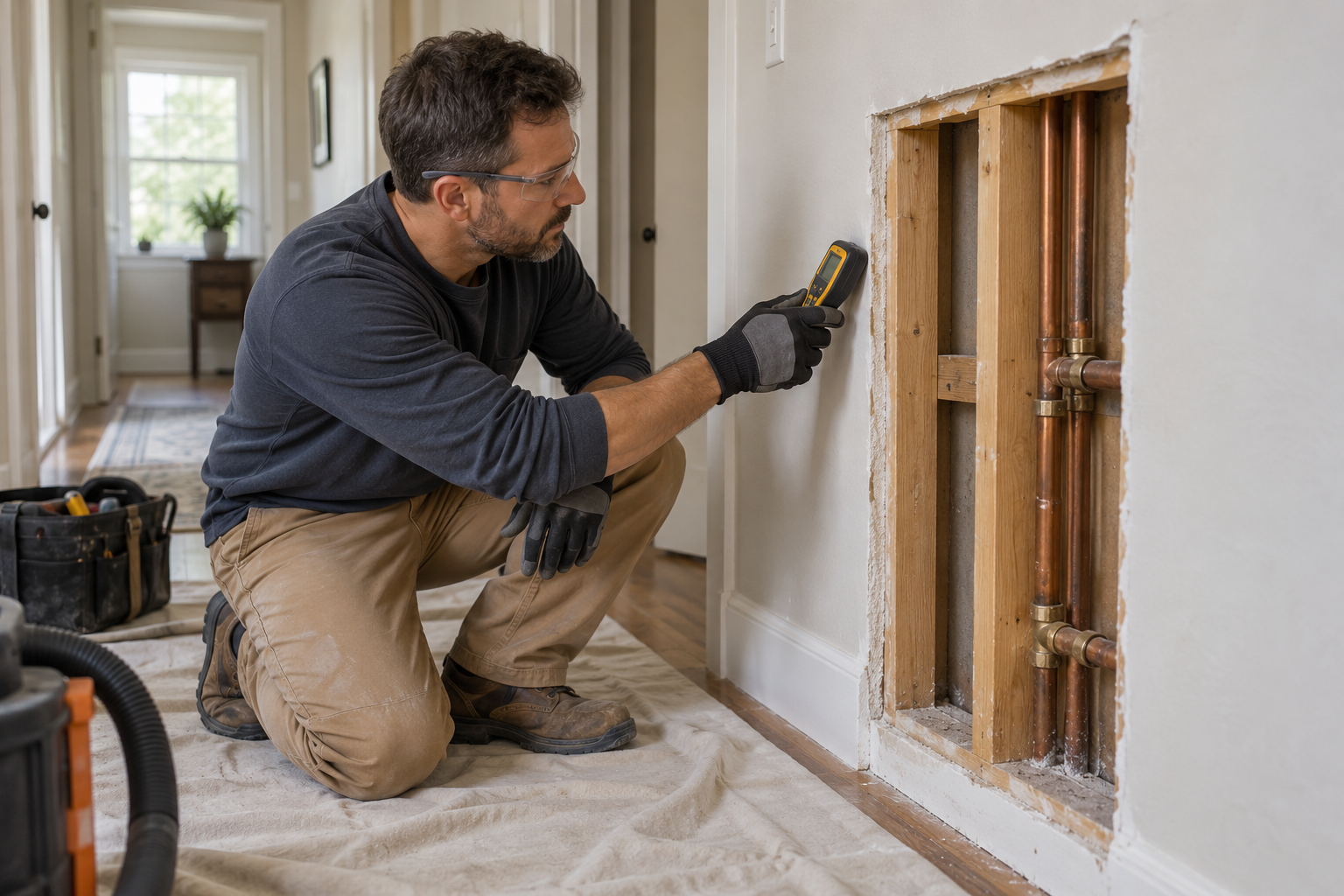
The drywall may need to be opened if concealed framing cannot be evaluated.
Are Exploratory Openings Needed?
Sometimes.
Drywall can hide:
- Cracked framing
- Rotten studs
- Missing supports
- Improperly installed beams
- Damaged headers
- Corroded connections
- Foundation movement
- Previous unapproved repairs
Openings may be recommended when:
- The wall is visibly displaced
- Water damage is present
- A structural alteration is suspected
- Framing dimensions are unknown
- Repair work is likely
- The crack pattern cannot be explained visually
What Repairs May Be Needed?
The repair depends on the cause.
Cosmetic Drywall Repair
A stable cosmetic crack may be repaired by:
- Removing loose compound
- Retaping the joint
- Applying new compound
- Sanding
- Priming
- Repainting
The crack may return if the underlying movement is not addressed.
Improved Drywall Detailing
Seasonal movement may be managed through:
- Floating corners
- Improved fastening
- Control joints
- Flexible trim details
- Truss clips
- Revised ceiling attachments
These methods allow limited movement without repeated cracking.
Beam or Joist Reinforcement
If framing is sagging or damaged, repairs may include:
- Sistering joists
- Installing a new beam
- Adding posts
- Improving connections
- Replacing damaged members
- Adding footings
Foundation Repair
Foundation-related repairs may include:
- Crack repair
- Drainage improvements
- Wall reinforcement
- Underpinning
- Soil stabilization
- New footings
- Foundation rebuilding
Cosmetic drywall repair should generally wait until the cause of movement has been addressed.
Roof Framing Repair
Roof-related repairs may include:
- Truss reinforcement
- Rafter repair
- Ridge beam support
- Ceiling tie replacement
- New connections
- Water-damage repair
Water and Rot Repair
Moisture-related repairs may involve:
- Fixing the leak
- Drying the area
- Removing damaged finishes
- Replacing rotten framing
- Mold remediation
- Improving ventilation
- Repairing flashing or drainage
Should Drywall Be Repaired Before the Cause Is Known?
Usually not.
Repairing a crack too early can:
- Hide ongoing movement
- Make monitoring more difficult
- Lead to repeated repair costs
- Conceal water damage
- Cover structural deterioration
The cause should be understood when the crack is significant, growing, or associated with other warning signs.
Can Drywall Cracks Affect a Home Sale?
Yes. Visible cracks may concern buyers, home inspectors, lenders, and insurers.
A crack does not automatically mean the home has a structural defect.
Documentation can help clarify:
- Whether the crack was cosmetic
- Whether movement was monitored
- Whether structural repairs were completed
- Whether permits were obtained
- Whether an engineer reviewed the condition
Repeatedly patching cracks without addressing the cause may create uncertainty during a property transaction.
What Documentation Should Be Kept?
Useful records include:
- Dated photographs
- Crack measurements
- Home inspection reports
- Structural reports
- Foundation repair records
- Renovation drawings
- Building permits
- Contractor invoices
- Water-damage reports
- Final inspection records
- Monitoring notes
These records can help show whether movement was stable and how repairs were completed.
Questions to Ask About Drywall Cracks
Useful questions include:
- When did the crack first appear?
- Has it widened?
- Does it change seasonally?
- Has it returned after repair?
- Are doors or windows sticking?
- Are floors uneven?
- Are there foundation cracks nearby?
- Is the wall bowed or leaning?
- Was a renovation recently completed?
- Has there been water damage?
- Are exterior masonry cracks present?
- Does the crack continue through multiple floors?
- Is there visible displacement?
- Should the crack be monitored?
- Is a structural assessment appropriate?
Frequently Asked Questions
Are cracks above doors always structural?
No. Small cracks above doors are common because openings create weak points in drywall. They become more concerning when they widen, show displacement, or appear with sticking doors and uneven floors.
Is a vertical drywall crack serious?
A straight vertical crack may follow a drywall seam and be cosmetic. It deserves closer attention when it extends through multiple levels or aligns with foundation movement.
Is a horizontal drywall crack serious?
It may be a failed drywall joint. It can also reflect wall or foundation movement, especially when the wall is bowed or displaced.
Do ceiling cracks indicate foundation damage?
Sometimes. Ceiling cracks can also result from drywall joints, truss uplift, roof movement, water damage, or poor installation.
Can drywall cracks be caused by humidity?
Yes. Seasonal humidity changes can cause wood framing and drywall joints to move.
Can a house settle without being structurally damaged?
Yes. Minor settlement can occur without affecting structural safety. Differential or continuing settlement is more concerning.
Should I repair a drywall crack immediately?
Small stable cracks may be repaired cosmetically. Growing, displaced, or recurring cracks should be investigated before they are covered.
Can foundation repair stop drywall cracks?
It may stop cracks caused by foundation movement, but existing drywall damage will still require cosmetic repair. Some minor movement may continue as the building adjusts.
Can drywall cracks appear after removing a wall?
Yes. Construction vibration and normal adjustment can cause minor cracks. Growing cracks or sagging may indicate inadequate support.
When should a structural engineer inspect drywall cracks?
Structural review should be considered when cracks are growing, displaced, repeated across the home, or accompanied by foundation cracks, sloping floors, bowed walls, or framing movement.
Final Thoughts
Drywall cracks can be a sign of structural damage, but many are caused by normal settlement, seasonal movement, poor installation, or minor finish problems.
The most concerning cracks are those that widen, return after repair, show displacement, extend diagonally from doors or windows, or appear throughout several areas of the home.
Drywall cracking should also be taken more seriously when it occurs alongside sloping floors, sticking doors, foundation cracks, bowed walls, sagging ceilings, or shifted structural supports.
The crack itself is often only a visible symptom. Understanding what is happening behind the drywall and throughout the rest of the building is the key to determining whether the issue is cosmetic or structural.
This article provides general information and is not a substitute for property-specific structural, construction, foundation, restoration, or building permit advice.
Easy steps to create a color palette
Lorem ipsum dolor sit amet, consectetur adipiscing elit lobortis arcu enim urna adipiscing praesent velit viverra sit semper lorem eu cursus vel hendrerit elementum morbi curabitur etiam nibh justo, lorem aliquet donec sed sit mi dignissim at ante massa mattis.
- Neque sodales ut etiam sit amet nisl purus non tellus orci ac auctor
- Adipiscing elit ut aliquam purus sit amet viverra suspendisse potent
- Mauris commodo quis imperdiet massa tincidunt nunc pulvinar
- Excepteur sint occaecat cupidatat non proident sunt in culpa qui officia
What is a color palette?
Vitae congue eu consequat ac felis placerat vestibulum lectus mauris ultrices cursus sit amet dictum sit amet justo donec enim diam porttitor lacus luctus accumsan tortor posuere praesent tristique magna sit amet purus gravida quis blandit turpis.

Don’t overspend on growth marketing without good retention rates
At risus viverra adipiscing at in tellus integer feugiat nisl pretium fusce id velit ut tortor sagittis orci a scelerisque purus semper eget at lectus urna duis convallis porta nibh venenatis cras sed felis eget neque laoreet suspendisse interdum consectetur libero id faucibus nisl donec pretium vulputate sapien nec sagittis aliquam nunc lobortis mattis aliquam faucibus purus in.
- Neque sodales ut etiam sit amet nisl purus non tellus orci ac auctor
- Adipiscing elit ut aliquam purus sit amet viverra suspendisse potenti
- Mauris commodo quis imperdiet massa tincidunt nunc pulvinar
- Adipiscing elit ut aliquam purus sit amet viverra suspendisse potenti
What’s the ideal customer retention rate?
Nisi quis eleifend quam adipiscing vitae aliquet bibendum enim facilisis gravida neque euismod in pellentesque massa placerat volutpat lacus laoreet non curabitur gravida odio aenean sed adipiscing diam donec adipiscing tristique risus amet est placerat in egestas erat.
“Lorem ipsum dolor sit amet consectetur adipiscing elit, sed do eiusmod tempor incididunt ut labore et dolore magna aliqua enim ad minim veniam.”
Next steps to increase your customer retention
Eget lorem dolor sed viverra ipsum nunc aliquet bibendum felis donec et odio pellentesque diam volutpat commodo sed egestas aliquam sem fringilla ut morbi tincidunt augue interdum velit euismod eu tincidunt tortor aliquam nulla facilisi aenean sed adipiscing diam donec adipiscing ut lectus arcu bibendum at varius vel pharetra nibh venenatis cras sed felis eget.